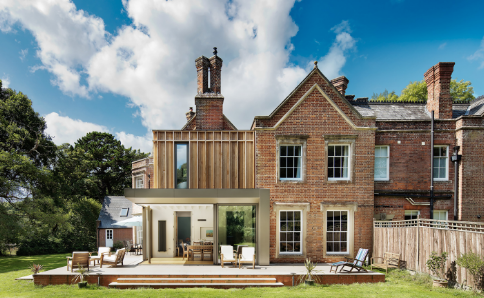
Two storey extensions are expensive. Let’s be honest about that upfront. You’re not just adding one floor of space. You’re building structure to support two additional floors of weight. You’re dealing with complex planning permission processes. You’re managing complex construction work.
Understanding what a double storey extension actually costs in 2025, or learning what factors drive pricing and how costs vary across the UK, helps you set realistic budgets before you commit to anything.
If you want to know more about how Extension Architecture breaks down costs for your specific London property, or understand what affects your final bill, you’ll see why getting detailed estimates early matters. The cost isn’t random. It’s driven by specific factors. Understanding those factors helps you understand the price.
Typical Double Storey Extension Cost per m²
This is where people need realistic expectations. Double storey extensions in 2025 typically run between 2500 and 4500 per square meter depending on location, complexity, and finishes.
That’s a wide range. Let’s break down why.
A basic double storey extension on a straightforward project might cost 2500 to 3000 per m². That’s London prices for relatively simple work with standard finishes.
A mid range double storey extension with decent finishes and moderate complexity runs 3000 to 3500 per m².
A high end double storey extension with premium finishes and complex design runs 3500 to 4500 or beyond per m².
For a 40 square meter double storey extension cost, you’re looking at roughly 100,000 to 180,000 depending on which category you fall into.
These are 2025 prices. Costs have increased from previous years. Material costs went up. Labor costs increased. Energy efficiency standards now required add cost.
What Affects the Cost of a Two-Storey Extension?
Multiple factors drive the final cost of your project. Understanding these helps you understand why your specific quote might be higher or lower than general estimates.
Location matters enormously. London costs more than Manchester. Manchester costs more than rural areas. Within London, Central London costs more than outer zones.
Ground conditions affect foundation costs. Good ground with solid bearing capacity costs less. Difficult ground with clay or poor bearing costs more.
Planning permission complexity affects timeline and cost. A straightforward approval costs less than fighting neighbor objections or making design revisions.
Existing building complications increase costs. If your existing structure has issues or unusual features, the design and build construction get more complex.
Material choices drive costs. Brick matching existing property costs more than standard brick. Premium windows cost more than basic. Good quality finishes cost more than budget finishes.
Roof complexity affects costs. A simple pitched roof costs less than a complex roof with multiple angles or dormers.
Structural design affects costs. Simple structure costs less than complex load bearing walls or steel requirements.
Design and architecture fees vary but typically run 10 to 15 percent of construction cost.
Contingency planning matters. Professional contractors build in 10 percent contingency. Cheap contractors don’t. Guess what happens when unexpected issues come up.
| Cost Factor | Low Cost Impact | Medium Cost Impact | High Cost Impact |
| Location | Outer UK regions | UK regional cities | London Central |
| Ground Conditions | Stable, good bearing | Mixed conditions | Poor soil, piling needed |
| Materials | Budget grade | Standard quality | Premium/bespoke |
| Finishes | Basic/standard | Mid-range | High-end/luxury |
| Complexity | Simple structure | Moderate design | Complex structural/design |
| Planning | Straightforward approval | Minor revisions needed | Major objections, redesign |
| Existing Building | Good condition | Some issues | Significant complications |
Cost Breakdown: Structure, Finishes & Professional Fees
Understanding where your money actually goes helps you grasp the pricing.
Structural work is the biggest cost component. Foundation work. Steel beams if needed. Load bearing walls. Roof structure. For a double storey, expect 30 to 40 percent of total cost going to structure.
Mechanical and electrical work runs 10 to 15 percent. Electrical circuits. Plumbing. Heating extension. Ventilation. This isn’t optional. Building Regulations requires it.
Finishes – walls, flooring, doors, decorating – run 15 to 25 percent depending on quality level.
Roofing runs 8 to 12 percent. It’s significant because roofing is specialized work and materials aren’t cheap.
Windows and doors run 5 to 10 percent depending on quality and quantity.
Professional fees – architect, engineer, Building Control – run 10 to 15 percent.
Contingency – set aside for unexpected issues – should be 10 percent.
Demolition and site prep run 5 to 8 percent.
These percentages are rough. Your specific breakdown depends on your specific project.
2-Storey Extension Costs Across the UK
Costs vary significantly across the UK. London is expensive. Other areas are cheaper.
London – typically 2800 to 4500 per m². Central London highest. Outer zones lower.
South East outside London – typically 2400 to 3500 per m². Significant savings compared to London.
Midlands – typically 2200 to 3200 per m². Further savings.
North – typically 2000 to 2800 per m². Most affordable region generally.
Scotland – typically 2200 to 3200 per m². Similar to Midlands.
These are rough ranges. Your specific costs depend on your specific project, location within the region, and complexity.
London costs more because labor costs more. Materials cost more. Land and building costs affect overall project economics.
How to Estimate Your Double Storey Extension Budget Accurately
Getting an accurate budget requires professional assessment. Don’t rely on online calculators or rough estimates.
Get a surveyor assessment first. They assess ground conditions. They note existing building issues. They identify complications early.
Get multiple architect quotes. Different architects might design differently. Costs might vary. Get at least two or three options.
Get detailed cost estimates from contractors. Not rough quotes. Detailed breakdowns showing what’s included and what isn’t.
Factor in professional fees. Architect. Engineer. Building Control. These aren’t optional.
Factor in contingency. 10 percent set aside for unexpected issues. This isn’t wasted money. It’s insurance.
Factor in your specific choices. Premium finishes cost more. Basic finishes cost less. Know what you actually want.
Extension Architecture provides detailed cost assessments for London double storey extensions. They know local costs. They know what drives pricing. They help you understand what your project actually costs.
2025 Cost Increases and What’s Driving Them
Costs have increased from 2024. Material costs remain elevated. Labor costs increased. Energy efficiency standards now required add cost.
Brickwork costs more. Timber costs more. Steel costs fluctuate but generally increased. Labor costs in London remain high.
Building Regulations changes sometimes require upgrades. Electrical safety standards tightened. Fire safety standards increased. These compliance costs are real.
Getting Value, Not Just Low Price
The cheapest quote isn’t always the best deal. A cheap contractor often cuts corners. Uses cheaper materials. Rushes through work. Creates problems later.
A professional contractor quotes fairly. They price in good quality. They price in proper procedures. They price in contingency for real problems.
You’re not just paying for construction. You’re paying for reliability. You’re paying for quality. You’re paying for peace of mind.
Why Extension Architecture’s Approach Works
Extension Architecture provides transparent pricing. They break down costs clearly. They explain what drives each component.
They don’t surprise you with bills that don’t match quotes. They manage costs professionally. They deliver what they promised.
For a London double storey extension, get professional assessment from Extension Architecture. They’ll give you realistic pricing for your specific project. You’ll know what it actually costs before you commit.