Heat exchangers are found in almost every industry, from food processing to chemical plants, and one of the most efficient designs uses pillow plates. These are panels made from two sheets of metal welded together in a pattern, then inflated to form channels that carry heating or cooling fluid. A pillow plate laser welding machine is the equipment that creates those weld patterns, and this article explains what pillow plates are, how the machine works, and why laser welding suits this job so well.
What Is a Pillow Plate
A pillow plate starts as two flat sheets of stainless steel, or another suitable metal, laid on top of each other. The sheets are welded together along a pattern of lines and spots, leaving un-welded areas between them. Fluid is then pumped between the sheets under pressure, and the un-welded areas bulge outwards, forming the characteristic quilted, pillow-like surface. The channels created in this way carry heating or cooling fluid across the plate.
The result is a heat exchanger panel that is strong, hygienic and efficient. The quilted surface creates turbulence in the fluid, which improves heat transfer, and the smooth stainless steel surface is easy to clean. That combination makes pillow plates popular in food and beverage processing, pharmaceuticals and chemical plants.
How the Welding Machine Works
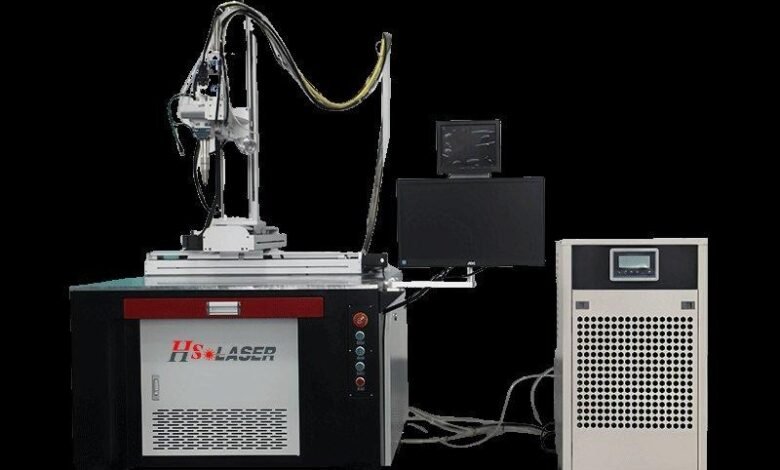
A pillow plate laser welding machine uses a focused laser beam to join the two sheets along the programmed pattern. The beam is guided by a motion system that follows the weld lines precisely, and the process is controlled by software that manages the laser power, speed and pattern layout. Because the laser concentrates energy into a small area, the welds are narrow and clean, with minimal distortion to the sheets.
The pattern itself is important. Different applications need different channel layouts, and the machine must be able to follow circles, straight lines and custom shapes with equal accuracy. Modern systems store many patterns and can switch between them quickly, so the same machine can produce plates for different customers and uses.
Why Laser Welding Suits Pillow Plates
Traditional welding methods struggle with pillow plates. The sheets are thin, and conventional welding introduces enough heat to distort them, which ruins the flatness needed for the inflation step. A pillow plate laser welding machine avoids this because the laser heats only a narrow zone, leaving the rest of the sheet cool and flat.
The speed of the process is another advantage. A pillow plate can contain many metres of weld, and laser welding completes that length far faster than manual or resistance welding. The welds are also consistent, which matters because every weld must hold pressure when the plate is inflated. A single weak weld can ruin the whole panel.
Materials and Thicknesses
Stainless steel is the most common material for pillow plates, thanks to its corrosion resistance and hygienic surface. The machine can also weld other metals used in heat exchangers, including carbon steel and certain nickel alloys, provided the laser settings are adjusted for each material.
Thickness is typically in the range of thin sheet metal, and the machine must handle both sheets evenly. The laser parameters, power, speed and focus, are set to penetrate the top sheet and join it to the bottom sheet without burning through. Getting this balance right is the core skill in pillow plate welding, and experienced machine suppliers provide proven settings for common material combinations.
5 Benefits of Laser-Welded Pillow Plates
- Efficient heat transfer: the quilted surface creates turbulence that improves performance.
- Hygienic design: smooth stainless steel is easy to clean and resists contamination.
- Strong and durable: consistent laser welds hold pressure reliably.
- Flexible patterns: the machine follows any weld layout the application needs.
- Fast production: laser welding completes long weld patterns quickly.
Quality and Inspection
Every pillow plate must be tested before it leaves the factory. The plates are pressure-tested to confirm that all welds hold, and the surface is inspected for flatness and finish. A pillow plate laser welding machine that produces consistent welds makes this testing straightforward, since failures become rare rather than routine.
Some manufacturers integrate inspection into the production line, checking weld quality as the machine works. This catches problems early, before the plate moves to the inflation and testing stage, and it reduces the number of panels that need rework.
Choosing a Pillow Plate Laser Welding Machine
When choosing a pillow plate laser welding machine, the working area comes first: it must be large enough for the biggest plates you plan to make. Power and speed come next, since they decide how quickly the machine completes a full weld pattern. The control software should make it easy to create and store patterns, and to adjust settings for different materials and thicknesses. It is also worth checking what support the supplier offers, including sample welding on your own plate designs, operator training and spare parts. A pillow plate laser welding machine chosen with these points in mind will produce consistent, high-quality plates from the first week of operation.
See also: Holiday Dessert Ideas Featuring Edible Glitter
Frequently Asked Questions
What sizes of pillow plate can the machine produce?
Most machines handle a range of panel sizes, from small plates for compact equipment to large panels for industrial heat exchangers. The working area of the machine decides the maximum size.
Can the machine weld different patterns?
Yes. The pattern is defined in software, so circles, straight lines and custom layouts can all be programmed and stored for repeat production.
Is laser welding better than resistance welding for pillow plates?
For most applications, yes. Laser welding produces less distortion, works at higher speed and gives more consistent results, especially on thin stainless steel sheets.
Final Thoughts
A pillow plate laser welding machine turns two flat sheets of metal into an efficient, hygienic heat exchanger panel. Its precise, low-heat welds follow any pattern the application needs, without distorting the thin sheets or compromising their strength. For manufacturers of heat exchangers and process equipment, it is a technology that delivers both quality and productivity in a single system.